
We Were Always Here
Why Agriculture is Black

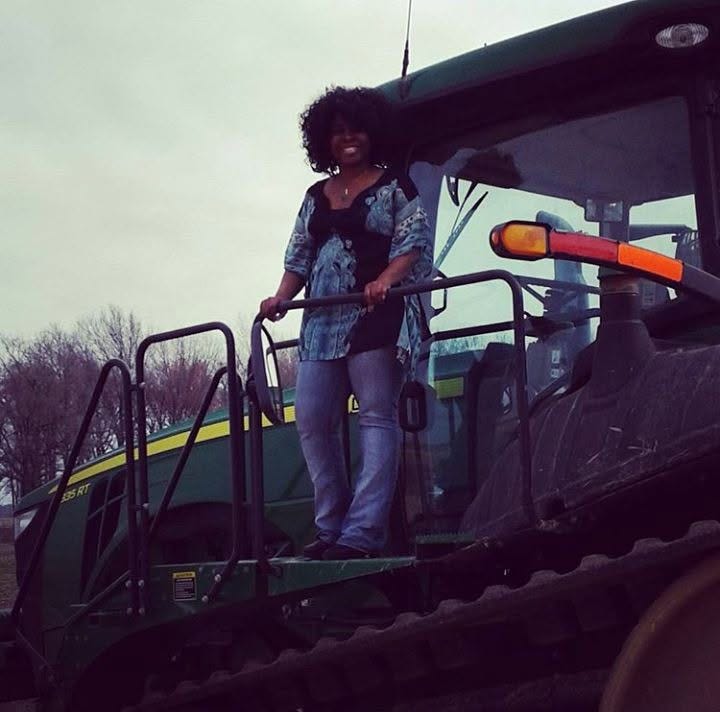
(Picture of me on our John Deere)
When the image of the “American farmer” is conjured in the national imagination, it almost always arrives in a specific package. We are shown a white man in overalls, perhaps standing next to a tractor, gazing out over golden wheat or neat rows of corn. We see the Heartland painted in monolithic strokes, a narrative that suggests rural America is, and always has been, exclusively white. But as a Black woman who tends my own small homestead, I know this picture is incomplete. When I look out at the horse farms and cattle ranches that surround me, I see a landscape where people who look like me are sparse sprinkles. Yet, our roots in this soil run deeper than the nation itself.
My homestead is a modest 14 acres, a quiet patch of earth where I prioritize my own joy, self-duty, and the simple happiness of nurturing life. It is a space unshackled from the traditional expectations placed upon Black women, a sanctuary where my primary obligation is to my own fulfillment and the land I steward. But I am not alone in this agricultural lineage. My son-in-law’s grandfather raised hogs, working the land with the kind of quiet dignity that doesn’t often make it onto agricultural magazine covers.
My grandchildren are blessed to grow up surrounded by a diverse tapestry of Black life, from the college-educated professionals to the blue-collar workers who keep this country running. But what amazes them the most, what truly captures their imagination, are the Black farmers. When they see a Black man or woman working the earth, they see the foundation of the world. They will look you in the eye and tell you, with the absolute certainty only children possess, that Black farmers feed the world. From their point of view, agriculture is Black.
They are young, but their perspective is historically profound. They do not yet know the statistics, that in 1920, Black farmers operated about one-seventh of all farm operations in the United States, owning millions of acres of land. They do not yet know about the systemic discrimination, the discriminatory lending practices by the USDA, or the weaponization of heirs’ property laws that led to a 90 percent decline in Black-owned farmland over the last century. Today, Black farmers make up less than two percent of all farmers in the nation. But my grandchildren do not see the deficit; they see the legacy.
They see the spirit of Dr. George Washington Carver, who revolutionized regenerative agriculture and soil biology, teaching farmers how to heal the land with crop rotation and legumes long before “organic farming” became a mainstream buzzword. They see the ingenuity of Dr. Booker T. Whatley, who pioneered the concept of Community Supported Agriculture (CSA) and pick-your-own farms, fundamentally changing how communities access local food. They see the resilience of the Colored Farmers’ National Alliance and Cooperative Union, and the enduring strength of Fannie Lou Hamer’s Freedom Farm Cooperative.
Black Americans have been integral to shaping the foodways of the United States. Enslaved Africans brought advanced agricultural knowledge that transformed Southern agriculture, cultivating staple crops and developing techniques that built the economic foundation of this country. Our relationship with the land did not begin and end with forced labor. After emancipation, Black farmers paved the way for small-scale farming cooperatives and sustainable land management, fighting for economic independence and autonomy through agriculture.
When my grandchildren say that agriculture is Black, they are speaking a truth that has been intentionally obscured. They are recognizing that the soil of this nation is infused with our sweat, our science, and our survival. Farming is not just a job; it is a profound act of self-determination. For Black women and girls especially, returning to the land, whether through a sprawling farm or a small homestead like mine, is a radical reclamation of space and peace. It is a choice to nurture ourselves first, to find happiness in the rhythm of the seasons rather than the demands of society.
It is time for all Americans to respect the richness of Black farmers. We must move beyond the whitewashed imagery of rural America and acknowledge the profound contributions of Black agriculturalists, past and present. We must support the current generation of Black farmers who are healing the land, feeding their communities, and fighting for food justice.
When you look at the American landscape, look closer. See the legacy of innovation, the cooperative spirit, and the deep, abiding love for the earth that Black farmers have carried for centuries. My grandchildren already see it. It is time the rest of the world opens its eyes and recognizes that the hands that feed us have always come in every shade of brown.